Summary
In this essay, I describe the current global conservation movement for climate and biodiversity as fundamentally a means of concentrating more wealth, power, and land ownership through the commodification and privatization of nature. The Global Public Private Partnership’s “Nature Positive” strategy centrally depends on assigning financial value to healthy, or intact nature as ecosystem services so that it can be regulated and sold through the market mechanisms they are designing through global governance. I provide detailed examples showing the arbitrary and self-serving nature of pricing ecosystem services, as well as how businesses are starting to profit from selling them. Because the wealthiest people already own a disproportionate amount of nature through concentrated land ownership, they will receive the bulk of profiting from it. I also illustrate how the “Nature Positive” movement includes the interlocking components of “Nature Based Solutions,” “Sustainable Development” and “30 x 30,” the campaign to “preserve” 30% of the earth’s surface. These combined business strategies serve as a license to appropriate land, particularly in the global south, by force in large-scale land grabs. I conclude by arguing that the central problem is not that nature is undervalued in dollars, but rather that it is not universally understood as priceless. We must use this recognition as a foundation for systemic change.
Introduction: The GPPP poses a problem and a solution
It would be difficult to miss the increasing stridence of the global environmental movement over the last decade, especially in the last several years. By “environmental movement,” I mean specifically the actions and advocacy of the Global Public Private Partnership (GPPP) on environmental concerns, as promulgated by the Conventions of the Parties (COP27, etc), the IUCN, foundations, international conservation and other NGOs, and their corporate partners.
The media inundates us on their behalf with desperate pleas for the climate, for biodiversity, for sustainable agriculture – with more and more “asks” from regular people such as to change our diets, own less, wash less, travel less, and go electric. We have also seen increasingly illogical connections drawn between the dire environmental conditions and pathogens, still births, heart disease and just plain old death.
The GPPP of “sustainability” has pushed primarily to halt climate change and more recently, biodiversity loss, or mass extinction with the stated goals of net-zero carbon emissions and a “Nature Positive” world. “Nature Positive” business activities leave the world with more nature than they take, primarily by using “Nature Based Solutions” and preserving 30% of land and oceans by 2030 (or in shorthand, “30 X 30”). Nature based solutions manage ecosystems in a manner that recognizes nature’s contributions to maintaining a habitable planet. For example, maintaining, creating, or restoring habitats (like forests, mangroves, or rivers) or using nature in the built environment (like green roofs) are nature based solutions.
Well, that’s how they talk about it anyway. As we live (globally) in a plutocratically controlled neoliberal corporatocracy, in which fewer and fewer people control more and more wealth and power, old-fashioned solutions to achieve the goal of sustainability have implicitly been written off as unrealistic. In the United States, for example, we do not have regulations that require large businesses to be nature neutral (let alone nature positive) by eliminating their pollution or restoring destroyed habitat because corporate capture of regulatory agencies and representatives is too extreme. You know, I mean, the same corporations that are leading the “Nature Positive” movement.
We cannot preserve 30% of our land and water in the USA for low impact public recreation/conservation because the government cannot afford to buy or manage such acreage, given our funding priorities (eg. war), and, apparently, because there is not sufficient philanthropic support from the wealthiest individuals. I’m thinking, of course, of the same people who donate heavily or even pledge all their wealth to the GPPP of “sustainability,” through international conservation organizations, their own private foundations, and public institutions. Further, while the government in the past simply took land for preservation without consent, fair compensation, or any concern for human rights whatsoever, such things are definitely frowned upon today in the USA.
Given such a dire lack of potential solutions, the GPPP has the answer! Make “saving nature” profitable and thereby unleash the flood of capital necessary to fund their “Nature Positive” plans using market solutions. This rhetoric is everywhere:
“While an increase in public funding would help plug some of the gap, there needs to be a significant increase in private sector investment in Nature-based solutions.”
2021 UN Environment Program
“Green Growth That Works is the first practical guide to bring together pragmatic finance and policy tools that can make investment in natural capital both attractive and commonplace.”
Stanford Natural Capital Project
“WAVES is a World Bank-led global partnership that aims to promote sustainable development by ensuring that natural resources are mainstreamed in development planning and national economic accounts.”
World Bank
“The scale of conservation challenges across the globe requires new and bigger sources of funding. Working with investors, lenders and companies to identify the economic value of nature, we can secure financing and investments that extend the impact of our philanthropic support for the benefit of people and nature.”
The Nature Conservancy
“The financial value of ecosystem services is at the heart of much of 21st century conservation, increasingly guiding economic decision-making and government policy. It is on the agenda at Davos this week in discussions about protecting the Amazon and the post-Covid economic recovery, and is likely to be a central issue in UN discussions on a Paris-style agreement on biodiversity to be negotiated in Kunming, China, later this year.”
The Guardian
The Global Public Private Partnership’s strategy centrally depends on assigning financial value to healthy, or intact nature so that it can be regulated through the market mechanisms they are designing through global governance.
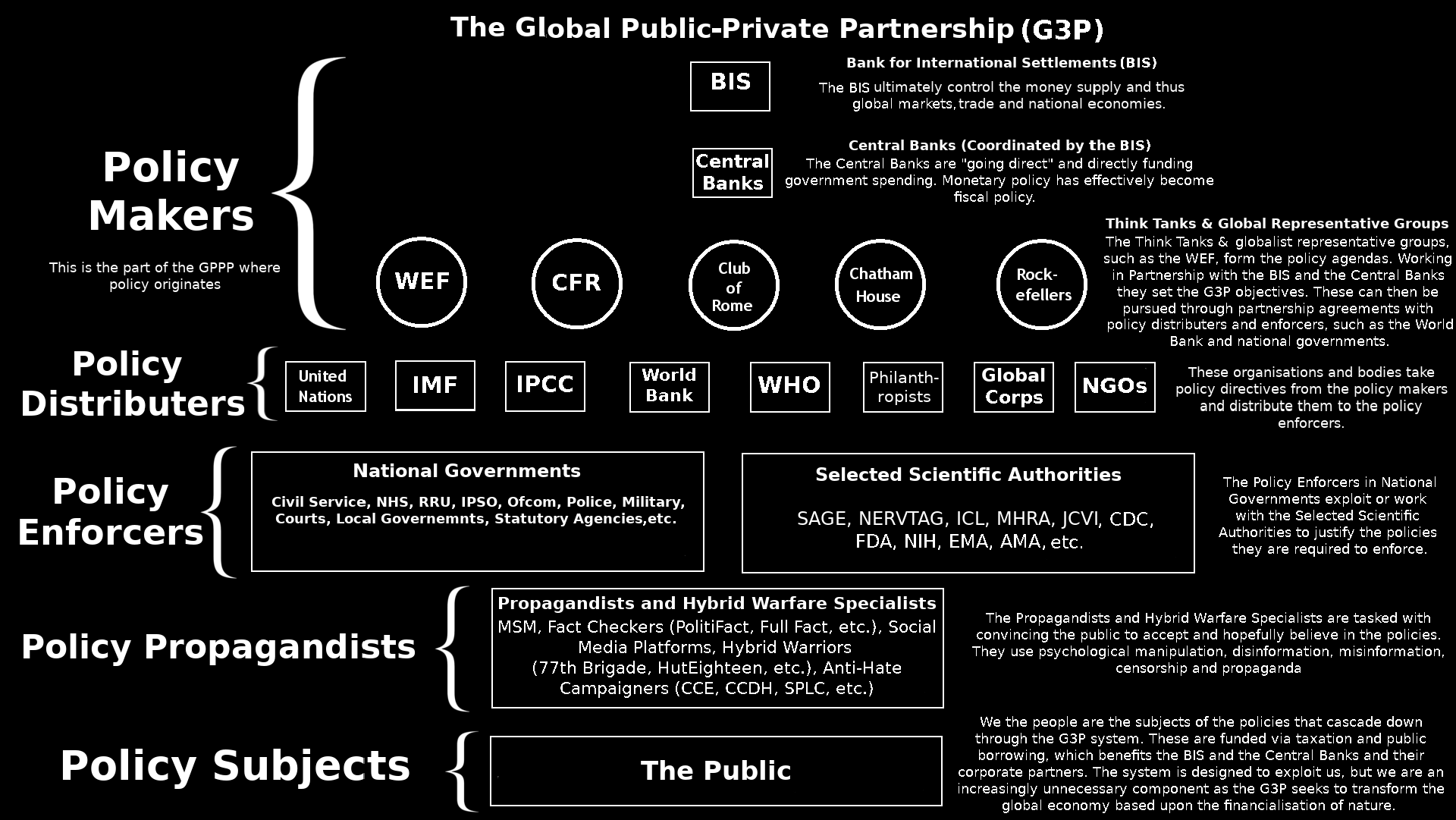
Land ownership is highly concentrated; therefore, so is nature ownership
To understand clearly how saving nature can be profitable, think about what it is that makes very wealthy people very wealthy. Is it the dollars they own? Is it the gold they have in their vaults? Those things are nice, indeed, but they are the after effects of wealth, not its original source. Fundamentally, wealthy people’s wealth springs from ownership of nature, as it is instantiated on their property, ie., the land they (or their corporations) own. Unfortunately, wealth in dollars traditionally comes from transforming nature into commodities – things people buy. So how on earth can spending money to NOT harm nature make a tidy profit? Before answering this question, bear with me as I take a detour into the state of global land ownership, which is necessary to see the big picture of what is wrong with the “Nature Positive” movement.
As it happens, wealthy people own A LOT of nature, some “used” and some not. Wealth inequality gets a lot of attention from would be reformers, but the underlying problem of land ownership concentration seems to get a lot less. Yet, this concentration is quite extreme, and growing globally. A recent investigative report by the International Land Coalition (ILC) found that land inequality has been rising in most countries since the 1980’s and has been underestimated due to not taking into account variations in land value or completely landless individuals. Ownership concentration of agricultural land seems to be the most well documented. As reported by the ILC, just 1% of farms operate more than 70% of the world’s farmland, including concentrated ownership in Europe (in which 3% own more than half of the farmland) and in the United States (where 7% of farms produce 80% of the food). Most estimates of ownership inequality also don’t take into account control of the land. For example, farmers in Vietnam may still own their tiny farms, but many serve as contract workers within a “ “small field, large farm” model … coordinated by large agribusinesses or conglomerates.”
Corporations and investors actually own most of the world’s largest farms of course, not farmers. As the ILC report states, “Parts of the world’s farmland are now considered financial assets, with no known physical owner, subject to decision-making processes that may be external to the farm and the agricultural sector.” The fact that land is increasingly becoming an investment also means that ownership concentration is likely to be underestimated: “… we do not always know who owns what land. Shareholding structures and other financial constructs are mushrooming in land (and do not have to be declared in any country in the world, to our knowledge, thus remaining totally invisible), and the opacity which often surrounds the finances and activities of investment funds makes it impossible to assess the full extent of their impact on land concentration and inequality.”
In the United States, the only country I could find figures for, forest ownership is also very concentrated. A United States Forest Service survey covering 2011-2013 found that 11 million “ownerships” owned 441 million acres, which was all the privately owned forest consisting of at least 1 acre. About 5 million of these owners own more than 9 acres, meaning the majority of the 11 million have relatively small parcels. From these numbers, out of a national population in 2011 of 311 million, approximately 3.5% owned at least an acre of forest (just approximate because multiple people can share ownership). Maybe that doesn’t sound too bad, but just 1.8% of the 11 million owners (which is, again, approximately 3.5% of the population) own a full 34% of all the privately owned acreage. This 1.8% of owners are corporations, Native American tribes, NGOs and LLCs.
“Saving nature” means the commodification of healthy nature, ie. selling ecosystem services
Back to our question: how can spending money to leave nature alone or restore it make money? If the wealthiest people want to make “saving nature” profitable for themselves, as owners already of large amounts of land, they simply need to commodify healthy, or what they can pass off as healthy, nature. Once nature, distinct from the property it is on, has a price, it can be sold. In sum, “Nature Positive” really means a net transfer of wealth from those of us who use ecosystem services to those who own the majority of nature.
This concentration of ownership is key to the dysfunctional nature of this movement, because without it, theoretically, the business model could essentially look like half the people making a living from the old form of commodifying nature (turning it into products) and the other half making a living restoring and preserving nature. Instead, what we actually have is the very same, very few people profiting from doing both at the same time while most people have to get by with less and less to live on.
The process of commodification and privatization of healthy nature is at the heart of the GPPP’s “Nature Positive” movement, which involves several interlocking components: selling ecosystem services, “sustainable” development, and the “30 X 30” plan or fortress conservation (privatizing land used by indigenous and local inhabitants in a manner that keeps them out). A tree farm provides an example of how the components overlap. It may be an acceptable form of “sustainable” development within a “protected” area (mining is actually quite common in protected areas). In addition to wood products, the farm may also sell ecosystem services in the form of carbon or biodiversity offsets. It may even employ best management practices around streams and rivers, allowing it to further benefit by enrolling in a water fund (which sells clean water to those downstream).
Since land ownership is the key to sustainable, regenerative profit through selling nature, the proposal to “set aside” 30% of the earth’s surface as wilderness by 2030 to promote biodiversity and climate health serves primarily as an excuse for large scale land grabs.
30×30 is a license for the wealthy to appropriate land in the global south by force
Currently 16% of earth is in preservation with 2/3 of that in the global south. While the 30 X 30 proposal asserts the goal is to set aside land on earth, in practice this largely means in the global south, which contains the majority of biodiversity hotspots.
Critically, land in the global south is also by far the easiest to “preserve” due to community-based, customary tenure rights rather than legally recognized ownership. While stealing land from people through coercion or force is frowned upon in the USA today, as I mentioned, it is much easier to clear local inhabitants off of desired parcels in the global south. Indigenous people and local communities use or manage 50% of the world’s surface collectively, but legally own only between 10% and 20% of it. Similarly, 90% of the land in rural Africa does not have documented ownership.
While lack of clear titles makes it easier for conservation NGOs and other corporations to appropriate territory, force is still required. Despite much talk about “working with the community,” conservation in the global south is a highly militarized operation. People are not merely evicted from their land, but shot, raped, tortured, and killed. The scale of the problem is great enough that there is currently a bill wending its way through the US congress to halt funding for conservation agencies and projects that engage in human rights abuses. Survival International, a key organization working for the rights of indigenous people, reports regarding the bill’s justification: ”At present much of the US$78-91 billion a year spent on biodiversity conservation globally goes towards “fortress conservation,” which evicts and excludes Indigenous and local people from their ancestral lands and employs guards who perpetrate appalling abuses.”
NGOs are too often brokers between the wealthy, businesses and government
Some may wonder whether it is fair to equate for profit corporations appropriating land for “sustainable” development enterprises with non profit conservation NGOs seeking to preserve land. Unfortunately, the two types of corporations are tightly interwoven at this point:
“Transnational conservation is dominated by mostly five international NGOs from the global north, with combined assets equal to the gross national product of many African countries and having strong ties to extractive industries and finance institutions. A quick look at the leadership teams of the Nature Conservancy, Conservation International, World Wildlife Fund, Wildlife Conservation Society, and African Parks shows panels full of CEOs, billionaires, and investment bankers from financial institutions like Goldman Sachs, Merrill, and Blackstone.”
Aby L. Sène in Foreign Policy
I used to think of conservation NGOs as philanthropic organizations. People donate to them and they spend the money to “save nature.” Now I know that is old school. Today, these NGOs are more like brokers between governments and corporations, working to create novel schemes utilizing new forms of financing to advance their missions at whatever cost in human life, freedom, or equality. The NGOs themselves don’t make a profit, they just facilitate the wealth and land ownership concentration of others.
An example of a “Nature Based Solution” that concentrates wealth
For example, Conservation International plans to protect mangroves in the Philippines through the creation of an impact investment, for profit, business, RISCO, that acquires and manages mangroves. Profit comes from the sale of so-called “blue carbon” (ocean based) carbon credits on the voluntary and hoped-for compliance based market and revenue from insurance companies and/or coastal asset owners. Coastal asset owners and insurance companies would be paying for the ecosystem service the mangroves provide of mitigating storm surges and flooding to reduce their risk exposure, as determined through actuarial type modeling.
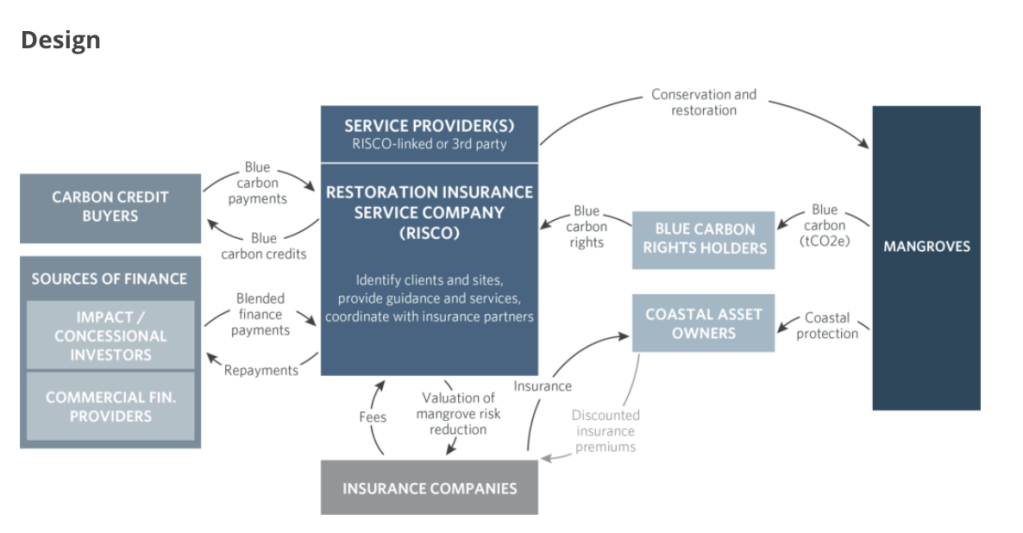
Of course, as always in these situations, RISCO pledges to acquire the mangroves and rights to the “blue carbon,” owned by the government in the Philippines, with “community support.” Although the local community is supposed to receive revenue sharing from the sale of the credits and on going payments for conservation and restoration monitoring, enforcement, planting and maintenance, the fact remains that RISCO transfers the ownership and control of an asset that generates profit in perpetuity from the local community to a tiny band of foreign investors.
Insurance companies, of course, also stand to benefit considerably due to the availability of new markets, previously deemed too risky. Coastal asset owners, differentiated from the “local community” in the RISCO documents, are also an illuminating “stakeholder” to think about. Somehow, all of them managed to buy or otherwise obtain rights from the government for their coastal businesses. Given that the greatest threats to mangroves are from shrimp farms and coastal development, it sure seems the government could simply halt these practices if it weren’t functioning for the benefit of these same parties. The elites’ current coastal assets will become more valuable through less competition and increased availability of insurance due to less risk. Meanwhile, they can shift investment into businesses like RISCO, that derive profit from protecting coastal assets, like the ones they conveniently own.
Taking action such as simply banning new shrimp farms or new coastal development that cannot accommodate healthy mangroves would certainly lower the Philippines ratings of how favorable a business climate it provides. RISCO’s materials include such a list compiled by the World Bank of favorable and unfavorable regulatory environments for business to assess potential countries to expand to after their pilot in the Philippines. It is easy to imagine the chilling effect low marks on such lists have on investors, including those who already are coastal asset owners or those who benefit them.
Remember that, as stated above, transnational conservation NGOs are “full of CEOs, billionaires, and investment bankers.” Some of these people, whether they are on boards or otherwise advise the NGOs or not, are the CEOs of the very same companies that form the market to buy blue and other carbon credits. Some of them, at the very same time! are quite likely to be investors in novel businesses like RISCO, thus profiting from their initial emitting activities and again when they buy credits. Some investors may, on the one hand, be urging the Securities and Exchange Commission to make carbon emission reporting mandatory (thus paving the way for mandatory markets in credits) while on the other hand be investing in businesses that sell credits or in property “for conservation” that forms the foundation to sell credits or other ecosystem services.
Pricing nature – with the cost of continuance of business as usual built in – is necessary to sell it
Perhaps the first step of commodification is setting a price. Many systems and programs of valuation exist at this point, as they must for those who “save nature” to make money. Stanford’s Natural Capital Project, for example, offers free software: “InVEST (Integrated Valuation of Ecosystem Services and Tradeoffs), a suite of models used to map and value the goods and services from nature that sustain and fulfill human life. It helps explore how changes in ecosystems can lead to changes in the flows of many different benefits to people.” Their core partners include the Chinese Academy of Sciences, The Nature Conservancy, and WWF. Their “network collaborators” include the World Bank, many governments and agencies, including the US Dept. of Defense, and corporations such as Dow, Dupont and Coca-Cola.
Of course, proponents of pricing nature do not emphasize the point that that which has a price can be sold. Rather, examples tend to point out that the value of ecosystem services outweighs their costs. For example, this case study offered by The Capitals Coalition, a Who’s Who of apparently every large conservation NGO, finance institution and corporation in the world, found that the Euros spent to maintain a protected marine area in Mallorca were dwarfed by the economic benefits of preservation. Most of the profit comes from so-called “cultural ecosystem services” – tourism – with other services lagging far behind in value: “at a considerable distance, cultural ecosystem services are followed by regulatory services such as coastal erosion control, which contributes annually with € 772,547 (16%) and the maintenance of biodiversity (€ 447,313, 9%).”
This example I chose at random from gazillions of choices on this page and elsewhere immediately reveals the folly of assigning monetary value to ecosystem services. How could tourism ever be worth more, and much more, than keeping the coast line intact or maintaining the biodiversity on which the tourism depends? Leaving aside such quibbles, however, we are supposed to now newly appreciate marine coastal vegetation (the source of erosion control) and biodiversity since they “contribute annually.”
The full case study reveals that the study estimated the financial value of the erosion avoidance from costs incurred by other communities fighting erosion – as the cost of damage avoided, in other words. The use of cost offsets to value ecosystem services is a commonplace method of valuation, and important to note due its role in setting up impact investment or Pay for Success (PFS) deals. As I explained in The New Surveillance Capitalism, these deals are the Go To for impact investors in public private partnerships in the human welfare sphere. Many of the same dynamics that apply in the human services category also apply to environmental work, including the need for surveillance to quantify impacts and the coming financialization, or speculative trading of new forms of debt backed securities.
The Mallorca study estimated the financial value of the biodiversity in the preserve with a survey of community members’ willingness to pay to preserve it as an add on to their local water bill. This method is also common for estimating the value of an ecosystem service. Its commonness should not prevent us, though, from noting its outrageousness. Nature is vital, bountiful, regenerative and resilient. And I am not using buzzwords here! I mean it. Nature only needs to be protected from extraction and pollution when these occur at too great a spatial or temporal scale, ie. when industrialization exceeds nature’s carrying capacity.
The question of how much local people are willing to pay to preserve their biodiversity obscures the underlying question of exactly who or what they are protecting it from. In other words, the question implicitly shifts responsibility for payment from the polluters or extractors to the public. It is as though the biodiversity loss just happens naturally, when the opposite is the truth. Who is getting the disproportionate lion’s share of the financial benefit from the unsustainable extraction from or pollution of everyone’s nature? Surely it is this tiny minority who should pay to “preserve” biodiversity if they insist on the continuation of their business as usual? In this way, the price for protecting biodiversity factors in (and renders invisible) the assumed continuance of business as usual because, otherwise, regeneration would naturally occur. The notion that the public at large should pay to restore or preserve or maintain ecosystems is a perfect example of socializing the cost of privatized benefits.
Selling ecosystem services can take many forms
The Brandywine – Christina Revolving Water Fund (the Fund), still in its pilot phase, provides a concrete example of how investors can profit from selling the ecosystem service of water purification. As the Fund targets private agricultural land in Delaware and Pennsylvania for its interventions, it also illustrates how selling nature as a service benefits those who own large parcels. It provides a new revenue stream for people who own large amounts of land, a small and shrinking portion of the population.
The Fund, developed in a partnership between i2Capital and The Nature Conservancy, “catalyzes conservation” by funding on-farm best management practices (BMPs), such as fencing and riparian buffers, to reduce stormwater and nutrient run off into streams that flow into the downstream urban water ways. The Fund commodifies the improvements in watershed health due to their interventions as “Environmental Impact Units” (EIUs). These are “sold,” via contract to municipalities and water utilities in the watershed, with actual payment contingent (ie. PFS) upon regulatory approval after the BMPs are implemented.

The municipalities and utilities hope that the EIUs will be a cheaper route to the mandatory regulatory compliance targets set by state and federal storm and drinking water standards than upgrading their treatment facilities or building new ones. The ability to address compliance issues upstream also adds a lot of options for reducing run off pollution that are more difficult within urban areas. The business plan for the pilot specifies that the market for the EIUs could expand in the future to include departments of transportation and construction and energy infrastructure projects that must comply with mitigation and offset regulations for their stormwater and other run off.
Obviously, in this case, the public will pay for water purification with or without the Fund. The Fund simply enables upstream changes on private property that would not otherwise be on the table to address compliance challenges. It makes sense as a solution within the current paradigm that nature degradation just happens. Like the Mallorca example above, little attention is given either to the status quo of suburban and urban development, with its endless impervious surfaces, or who disproportionately benefits from this form of development. Similarly, farms in the watershed are not required to prevent run off from their properties. If they were, food prices might rise, but in a manner that would incentivize agricultural practices that maximized production within nature’s carrying capacity.
While the pilot phase has been funded through a range of public subsidies, “philanthropic” and corporate capital, once all the kinks have been worked out and risk significantly reduced, the fund will rely primarily on impact investors. Considerable profit should be likely eventually once the fund replicates and scales, as intended, given that the business plan envisions that the first 6 year pilot phase with 26 farms should earn 600,000 dollars/year revenue with an initial capital investment of only 1.5 million. The fact that a few BMPs on these 26 farms is projected to result in upwards of 60 tons of sediment removal per year gives some indication of the acreage of the intended beneficiaries of the funds.
The Fund heralds itself as not only bringing new capital to watershed conservation, but also to farmers. Although the details don’t appear to be spelled out online anywhere, apparently, in return for the contractual obligation to keep the BMPs on their farms, farmers receive compensation. The Fund, in partnership with Ecosystem Services Market Consortium, is also piloting a program to “stack water and carbon assets to produce maximum benefits for regional producers while achieving corporate sustainability objectives.” In other words, the Fund is planning on selling carbon credits as well as the EIUs (essentially clean water credits) from the same projects and farms and the producers (farmers) will receive compensation for these.
Natural Asset Companies: A model for replicating and scaling companies like the Fund and RISCO
Many people were struck by the news last fall that the NYSE, in partnership with the Intrinsic Exchange Group, was introducing a new asset class, Natural Asset Companies (NACs) “based on nature and the benefits that nature provides (termed ecosystem services).” Excellent articles were written at the time, including clear warnings that NACs would privatize the remainder of our “commons.” However, it has not been clear how a NAC could do so or their relationship to currently existing structures.
While they sound complicated, in part because there are no publicly available examples as yet, NACs are simply an alternative form of organization for companies selling ecosystem services, exactly like the Fund does, with distinct advantages for maximizing investor access and profit. NACs separate the rights to ecosystem services from other property rights, similar to the way that a landowner may sell mining rights but retain ownership of the property. The Fund, while not an NAC (yet), provides a good example of how NACs will operate. The Fund’s founders envision it as a “private debt instrument” but as a NAC that had purchased the rights to the farms’ carbon sequestration and water filtration services, investors could buy and trade equity shares on the NYSE. This type of financial arrangement opens the door to highly profitable speculative trading of an infinite array of derivatives.
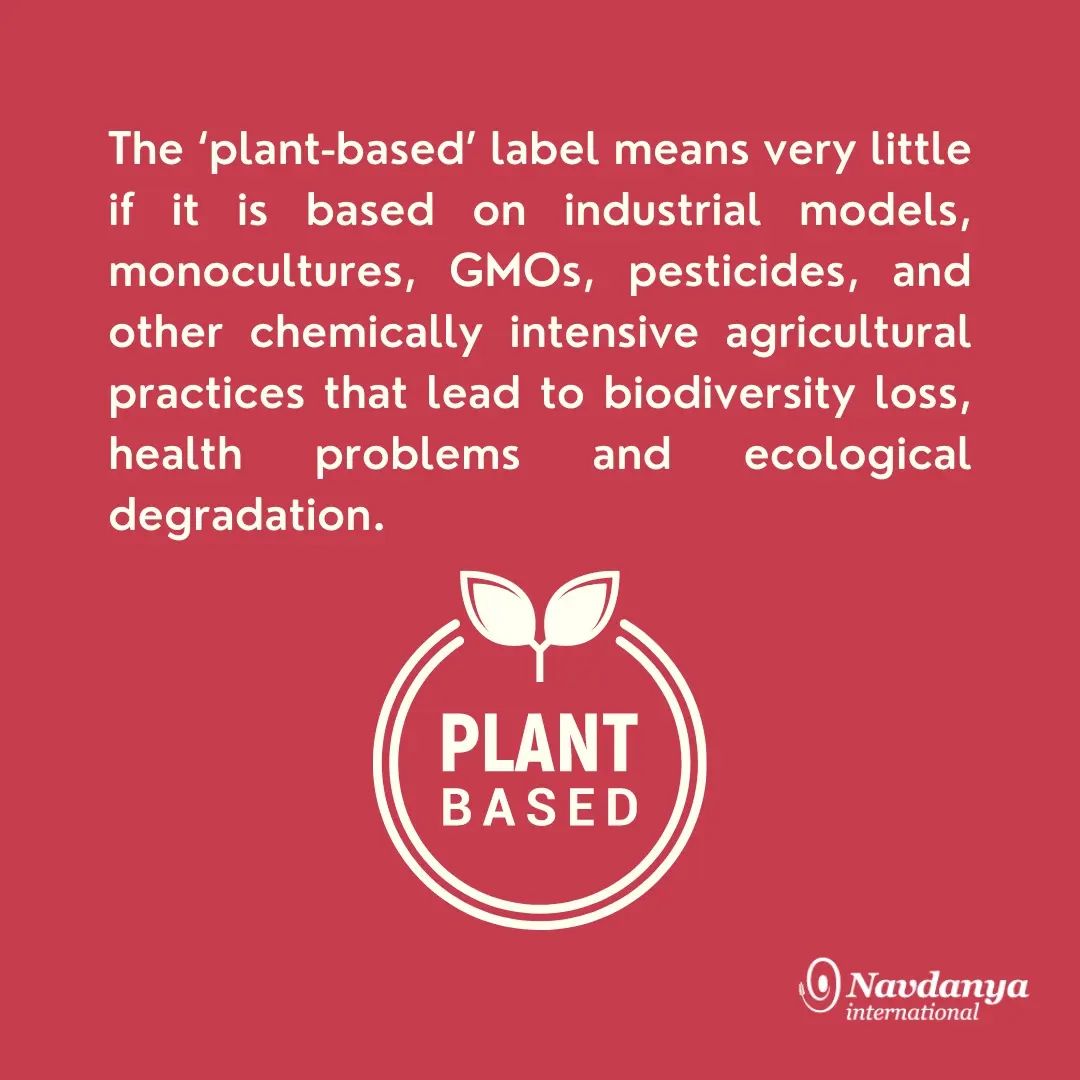
NACs are planned to operate in “working areas,” particularly “regenerative farms,” and in natural areas. NACs clearly intend to sell carbon and biodiversity credits, as well as water purification services like the Fund. Farm NACs can sell these ecosystem services, as well as the commodity crops raised there, since “The use of natural resources…may be … included in the rights granted to the Natural Asset Company”. Although I hope to cover in detail the farce of “sustainable development” operations including “regenerative farms” at another time, suffice it to say that the following picture captures the Orwellian redefinition of this term:

As agricultural chemical giant Corteva explains on their web page on “Sustainable Farming”: “The venture capital community, too, has gotten involved, ploughing a record $1.5 billion into all parts of the agriculture supply chain in 2017. Investments are giving rise to instrumentation for monitoring microclimates, robotics and precision machinery for managing inputs, drones for survey fields, and big data analytics for maximizing yield, quality, and sustainability.”
The general idea is that “precision” application of herbicides, pesticides and fertilizers allow for no till agriculture (as do other, actually regenerative practices such as deep mulching), which reduces soil erosion and sediment pollution. Plus, of course, by using precise amounts, there would be less chemical and nutrient run-off.
The more money to be made from nature, the more nature will be taken
A NAC that has purchased the rights to a natural area, for example, from a government that might not be willing or able to sell a jungle outright, is also likely to sell carbon and biodiversity credits. The possibilities for profit, though, of owning the rights to large global biodiversity hotspots are as endless as the possibilities for exploitation. As the Intrinsic Exchange Group’s website says, “These include provisioning services such as food, water, timber, and genetic resources; regulating services that affect climate, floods, disease, and water quality; cultural services that provide recreational, aesthetic, and spiritual benefits; and supporting services such as soil formation, photosynthesis, and nutrient cycling.” The separation of ecosystem rights from the properties provides a neat vehicle for foreign investors to control and profit off other countries’ nature.
This vehicle for enormous wealth generation clearly incentivizes large scale land grabs in the global south, where the majority of healthy nature can be found. Whether NACs or similar enterprises form as part of a government’s pledge to 30 X 30, or a corporate pledge to “sustainable” development, the result is the same. Indigenous people and local communities, the best stewards, lose the use of their common land, leading to impoverishment and ultimately, presumably, to a more urban relocation.
Conclusion
Taking their own propaganda at face value, the world’s most powerful corporations, billionaires and financial institutions are working to build a new economy that “include[s] the full value of nature in the everyday workings of our financial system.”
Doing so at scale requires the global institutional participation of the entire Public Private Partnership. Considering only the role of national governments, we see they must make carbon and other types of credits mandatory, serve as buyers for such credits for the public (as in the municipality example with the Fund), financially subsidize the organization of new businesses “to reduce investor risk,” sell government assets to “sustainable development” corporations, create conducive financial regulations for trading, and balance “environmental” regulation perfectly such that there is enough to force the purchase of credits, but not so much that the need is obviated.
Obviously, the idea that “free” markets can solve our environmental problems if only nature can be bought and sold like every other commodity is absurd. The very idea of pricing nature requires government cooperation! The leaders of the GPPP are in the process of strategically crafting the market place for nature through governance that will best serve their interests. The whole system will be almost entirely self- dealing. While their polluting and extractive corporations will have to buy credits (presuming they fail to pull off mandatory accounting at the consumer level instead), they will buy them primarily from NACs they own large shares in and that operate from land they own.
The Intrinsic Exchange Group, the Rockfeller, venture capital and development bank funded creators of NACs, says that the fact that “nature is not an asset that can directly produce income and wealth …[is] a massive design flaw built into our economic system.”
I would argue that the central problem is not that nature is undervalued in dollars, but rather that it is not universally understood as priceless. In the past, children were routinely exploited for their labor. Better child welfare was not achieved by creating new market mechanisms to buy and sell children. Rather, social consciousness changed to recognize children’s lives as priceless and industrialists and others were politically forced to recognize this new reality. Furthermore, even though many parents exploited their children due to financial necessity, the political and social shift that offered much greater protection to children did not result in greater impoverishment.
I think the solutions to the environmental problems we face could start by asking what needs to change to reify nature as priceless. Each potential solution will illuminate dysfunction in other aspects of “the system,” that in fact, includes so much more than any narrow definition of “economics.” For example, obviously, government regulation can’t work so long as government is primarily a partnership with private financial interests that replace public interests, accountability and transparency. Similarly, countries in the global south cannot protect their natural resources at the same time they are subject to crippling foreign debt and global financial exploitation. The problems with the “Nature Positive” movement cannot be understood or even seen in isolation – they are systemic – and so must be the real solutions to environmental degradation.





 The Feisty Adélie